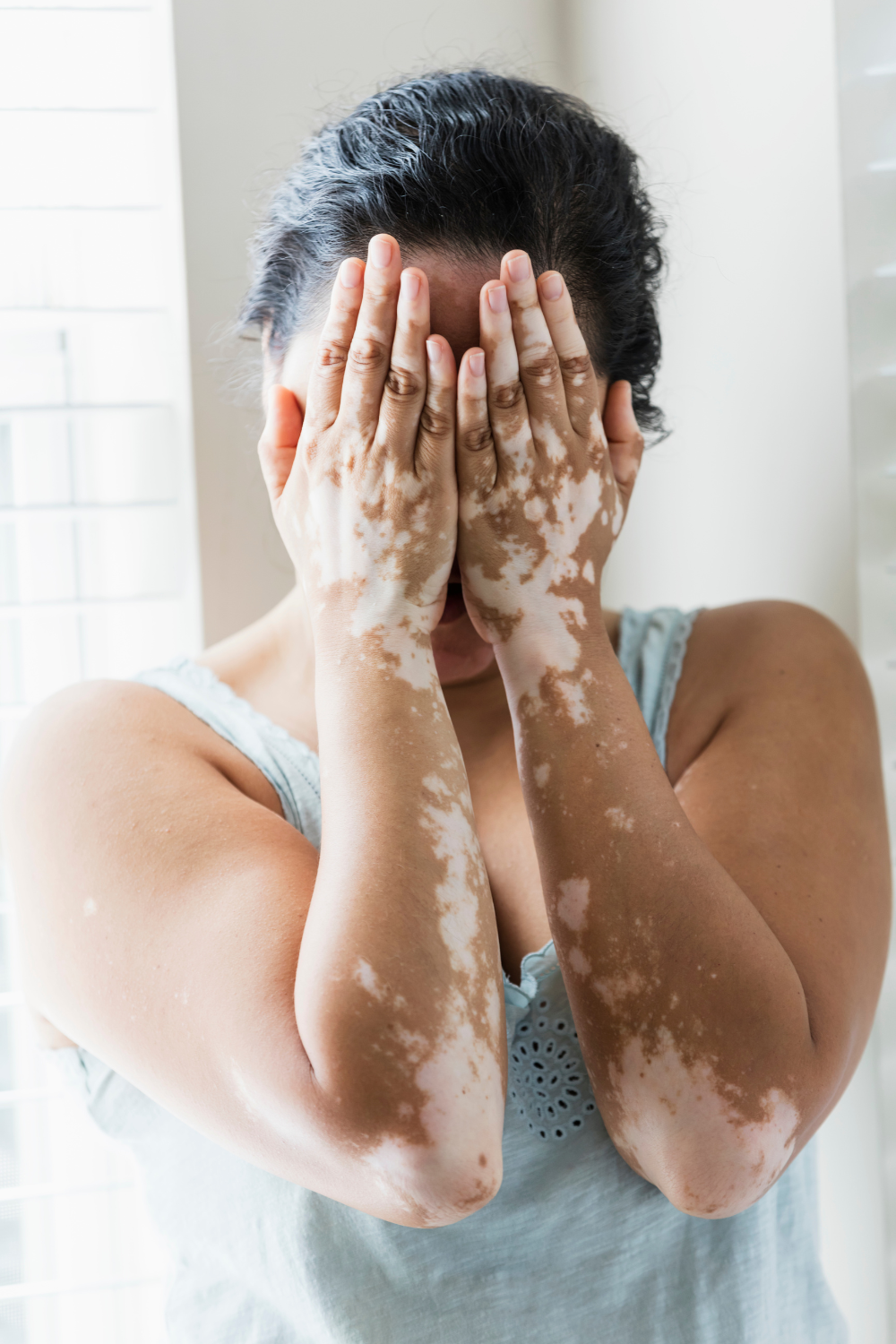
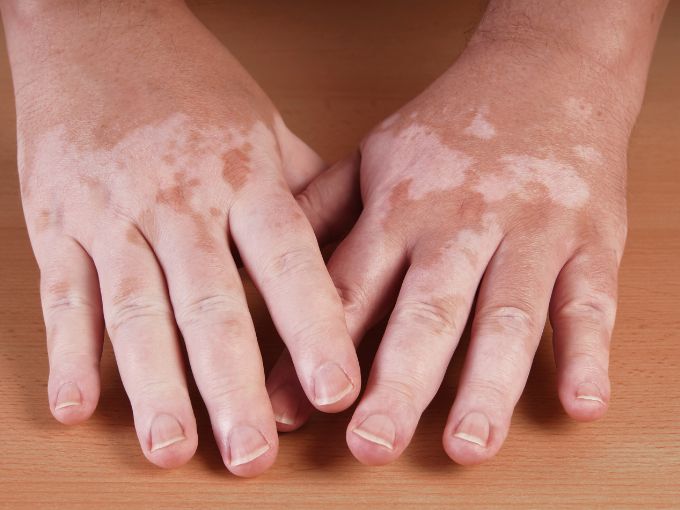
When stable vitiligo patches don't respond to creams, ointments or phototherapy, surgical repigmentation can restore natural skin tone. At PRALASH, our dermatologist confirms patch stability first, then performs punch grafting or melanocyte transplantation to help patches regain colour that blends with the surrounding skin.
Vitiligo is a condition where skin loses its natural colour in patches because the pigment-producing cells — melanocytes — stop functioning or are destroyed in that area. Most patients are first treated with topical medication, oral therapy or phototherapy (NB-UVB).
Vitiligo surgery is considered when a patch has been stable for a meaningful period and hasn't responded to these medical options. It involves transplanting healthy, pigment-producing cells from an unaffected part of your body into the depigmented patch, so the area can regrow its natural colour.
Every case starts with confirming stability — the single biggest factor in whether surgery will succeed.
We examine your patches, review how long they've been unchanged, and may recommend a small test graft to confirm the area will respond before planning full surgery.
Healthy, pigmented skin is selected from a donor area — commonly the thigh or buttock — where scarring will be minimal and easily hidden.
Depending on the technique, either tiny skin grafts or a melanocyte cell suspension is prepared from the donor tissue under sterile conditions.
The donor cells or grafts are carefully placed onto the prepared vitiligo patch and secured with a protective dressing.
The area is kept protected while new pigment cells settle in. Follow-up phototherapy is often advised to help the transplanted melanocytes spread and blend with surrounding skin.
Tiny full-thickness skin grafts are lifted from the donor area and placed into small punch-sized holes in the vitiligo patch — well suited to smaller, stubborn patches.
Blisters are raised on donor skin and their pigment-rich roof is transferred onto the prepared patch, leaving minimal donor-site marking.
Cells from a small donor sample are processed into a suspension and spread across the patch — able to cover larger areas from a small donor site with a more even, blended tone.
A thin sheet of donor skin is grafted over larger or resistant patches, typically reserved for more extensive stable vitiligo.
NB-UVB sessions after surgery help stimulate the transplanted melanocytes and encourage even pigment spread across the treated area.
For the right candidate, vitiligo surgery offers:
Repigmentation of patches that haven't responded to creams or light therapy
Uses your own skin cells — no foreign material or implants
A one-time procedure rather than months of ongoing topical treatment
Can be combined with phototherapy for a more even colour match
Performed under local anaesthesia as a day-care procedure
Renewed confidence with natural-looking results in stable cases
Vitiligo surgery is generally considered for:
Cost depends on the technique used, patch size and number of areas treated.
Vitiligo surgery only works when the diagnosis and stability assessment are right. At PRALASH, we don't rush into surgery — we confirm your vitiligo is stable, explain realistic outcomes, and choose the technique best suited to your patch size and location.
Call +91 99005 17699We assess how long your patches have been unchanged before recommending any surgical option.
No implants or foreign material — grafts come from your own donor skin.
Punch grafting, SBEG or MKTP — chosen based on your patch size, site and skin type.
Trusted by patients across HRBR Layout and North Bangalore.
| Factor | Medical Therapy | Vitiligo Surgery |
|---|---|---|
| Best For | Active or recently developed patches | ✔ Stable, treatment-resistant patches |
| Timeframe | Months of ongoing sessions or application | Single procedure plus follow-up |
| Downtime | None | A few days at donor & graft sites |
| Predictability | Variable response | ✔ More predictable on confirmed-stable patches |
| Suitable When | Vitiligo is still active | ✔ Vitiligo has been stable 6–12+ months |
Our dermatologist will recommend the right path for your specific patches after assessing stability.
Donor and graft sites heal; the treated patch may look pink or patchy at first.
Initial repigmentation becomes visible around the transplanted areas.
Colour continues to spread and blend with surrounding skin, often aided by phototherapy.
Final colour match settles — results are typically most stable and even by this point.
Vitiligo surgery is performed under sterile, clinically supervised conditions. Possible temporary effects:
If stable vitiligo patches haven't responded to creams or light therapy, surgical repigmentation may be the next step. Looking for vitiligo surgery in Bangalore near HRBR Layout? Book a consultation with our dermatologist at PRALASH to check if you're a candidate.