Jaw pain, clicking, morning headaches, or a jaw that catches when you chew? At PRALASH Dermystique & Dentique, HRBR Layout, we assess what's actually driving your TMJ symptoms and treat the cause — not just the ache.
TMJ disorders (TMD) affect the joints connecting your jawbone to your skull, along with the muscles that move them. When these joints or muscles aren't working smoothly — from grinding, injury, arthritis or an uneven bite — the result is pain, clicking, stiffness, or a jaw that locks or catches when you open wide.
TMD is common and, for most people, very treatable. The right starting point is figuring out what's actually driving your symptoms — night-time grinding, jaw muscle tension, or a joint problem — rather than guessing.
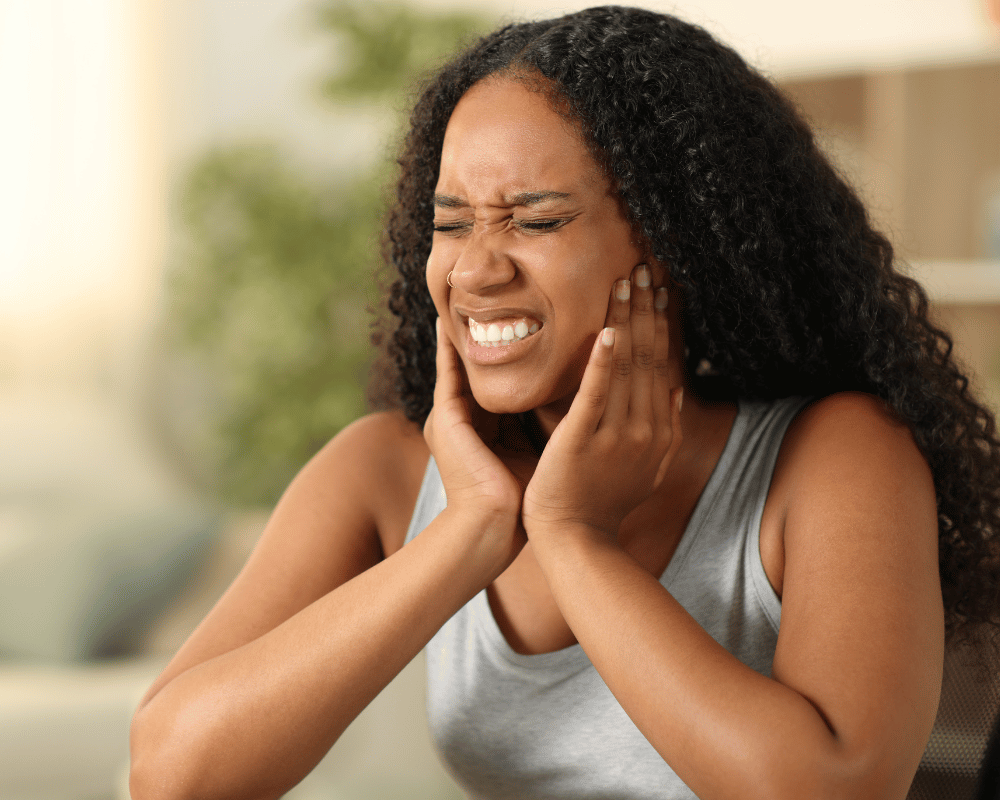
We check your jaw opening range, joint sounds, muscle tenderness and how your bite closes.
Grinding, clenching, stress patterns and sleep habits are reviewed to identify the trigger.
X-rays, or a referral for a CT/MRI, are used in cases where the joint itself needs a closer look.
A night guard, Botox, lifestyle guidance, or a combination — based on what your case actually needs.
A night guard or splint is fabricated and fitted precisely to your bite for the best results.
Symptoms are reviewed and the splint or plan adjusted until relief is consistent.
A full-coverage night guard that prevents tooth-to-tooth contact — the standard first-line treatment for grinding and clenching.
Guides the jaw into a more balanced position when it has shifted from injury, tooth loss or joint changes — worn more during the day.
Masseter Botox relaxes an overactive clenching muscle, often used alongside splint therapy — see our Botox page for details.
Practical changes — soft diet during flare-ups, posture, stress habits and simple jaw exercises — that reduce strain on the joint.
Your treatment targets what's actually driving symptoms — grinding, muscle tension or joint position — not just masking pain.
The large majority of TMD responds well to a night guard, lifestyle changes and sometimes Botox — no surgery needed.
A night guard also prevents the wear, chipping and cracking that grinding causes over time.
Reduced jaw tension often means fewer morning headaches and a more restful night.
Splint therapy and jaw muscle Botox work well together for grinding-driven cases.
Consider a TMJ assessment if you have:
Price depends on the splint type and whether Botox or combination therapy is needed. A written estimate follows your assessment.
Diagnostic assessment plus a custom-fabricated splint.
Repositioning splint, jaw muscle Botox, or combined treatment, priced after assessment.
We assess what's actually driving your symptoms before recommending a night guard, Botox, or both.
Night guards and splints are fabricated precisely to your bite, not a generic over-the-counter fit.
Jaw muscle Botox is available on-site for grinding-driven cases, without a referral elsewhere.
Easy to reach from HRBR Layout, Kalyan Nagar and Banaswadi for fitting and follow-up visits.
| Factor | Night Guard (Splint) | Jaw Muscle Botox |
|---|---|---|
| How It Works | Physically prevents grinding contact | Relaxes the clenching muscle itself |
| Onset of Relief | Within days to weeks | 1–2 weeks, building over the first month |
| Duration | Ongoing nightly wear | Around 4–6 months per session |
| Reversible | Yes — simply stop wearing it | Yes — effect fades naturally over months |
| Also Helps With | Protects teeth from wear | Jawline slimming as a side effect |
Curious about jaw muscle Botox specifically? See our Botox Treatment page for full pricing and details — many patients combine it with splint therapy for the best relief.
Book a TMJ assessment at PRALASH Dermystique & Dentique, HRBR Layout — and find out what's actually behind your symptoms.