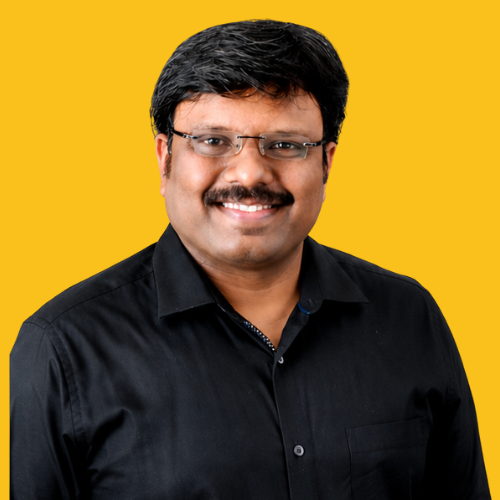
You notice a missing tooth first while eating, not in the mirror. One side of your mouth quietly starts doing all the work. A dental implant fixes this at the root, which is why it holds up so differently from a bridge or denture. For anyone looking into the best dental implant in Bangalore, every case at PRALASH Dermystique and Dentique is placed personally by Prof. Dr Lalith V Anand, with 26+ years of experience in periodontics and implantology practice.
It is a titanium screw placed into the jawbone, standing in for a tooth root. Bone grows around it over a few months, then a crown or bridge is fixed on top.
A conventional bridge uses neighbouring teeth for support, which usually requires those teeth to be prepared for the restoration. A conventional removable denture rests on the gums and may move during eating or speaking, particularly when retention or fit is reduced. An implant asks nothing of the surrounding teeth. It stands on its own, in bone.
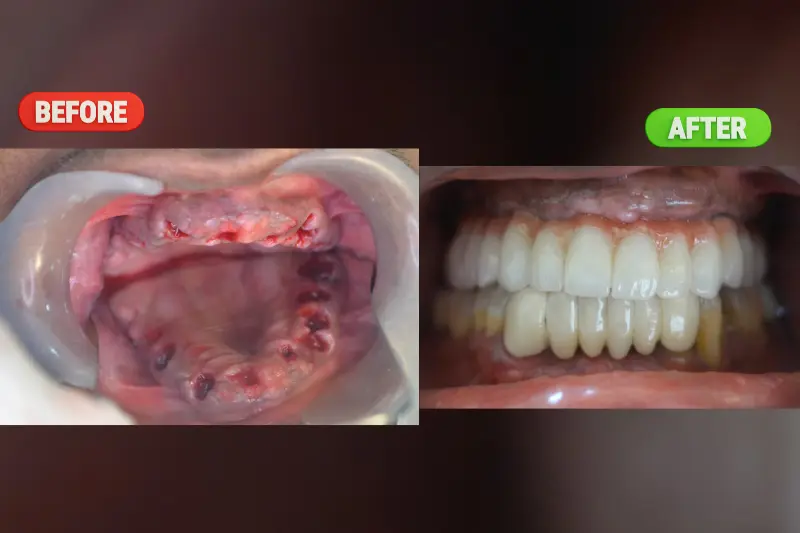
Nothing is planned off a quick mirror check. A 3D CT scan comes first, showing bone density, nerve position, and sinus location, which is what actually decides the angle and depth of placement.
Surgery is quicker than people expect, often under an hour, done under local anaesthesia. The slow part comes after: bone fusing around the implant, called osseointegration, usually needing a few months before it can carry a permanent crown. Patients with dense bone sometimes get a temporary tooth the same day. That decision comes from the scan, never a promise made beforehand.
For a single tooth or short bridge, two stage implants remain standard, and there is little reason to deviate. For patients missing most of their teeth who do not want months of grafting first, angled placement can carry a full arch on far fewer fixtures.
Where bone loss has gone further, zygomatic and basal implants anchor into stronger bone elsewhere in the skull. Dr Lalith has taught these techniques in Spain, Argentina, and the UK, which is part of why cases turned away elsewhere for lack of bone often end up here.
One implant, one crown, healthy neighbouring teeth left untouched.
A small number of implants carry a fixed bridge across several missing teeth.
All on 4 dental implants support a full arch on just four fixtures, often finished with temporary teeth the same day. For someone missing every tooth, this is usually the fastest route to a full mouth dental implant.
A removable denture clipped onto a few implants, far steadier than gum suction alone.
For severe bone loss, these anchor further back into denser bone and shorten the overall timeline.
The bone benefit surprises most people. Leave a gap empty for a few years and the jawbone underneath quietly shrinks, which is often why an older face looks sunken near the jaw. An implant keeps that bone stimulated.
Then there is the daily difference. No soaking a plate overnight, no second guessing whether it will move while you laugh at dinner.
Most healthy adults with enough bone qualify, whether that is one molar lost in an accident or a full set worn down over decades. Age rarely rules anyone out on its own. We have placed implants successfully in patients in their late seventies.
Diabetes and gum disease deserve an honest conversation. If either is poorly controlled, healing slows and risk rises, and that gets said plainly rather than discovered later. Heavy smokers are not turned away, but they hear the same honesty.
Prof. Dr Lalith V Anand, BDS, MDS, PhD, MOI (NYU, USA), FOI (NYU, USA), FOI (Cambridge, UK), FCIP.
26+ years in general dental practice, the last twenty limited entirely to periodontics and implantology practice. Trained further at Harvard University and New York University College of Dentistry, and now teaches oral implantology to postgraduate dentists in Spain, Argentina, and the UK.
He says the patients who worry him most are rarely the surgically difficult ones. They are the ones told elsewhere that nothing could be done, when a proper scan shows otherwise.
There is no single honest number without seeing your mouth first. Cost moves with the implant brand, how many teeth need replacing, and whether grafting has to happen before the implant goes in.
At consultation, you get your own CT scan explained directly, followed by a written, itemised quote before anything is booked. Most delayed treatment happens because an earlier quote felt vague or shifted later, and that is the exact problem this avoids.
A single implant typically runs three to six months from placement to final crown, depending on how quickly your bone fuses. Full arch cases with same day temporary teeth still need four to six months before the permanent set.
Healing speed genuinely differs from person to person, and giving the implant enough time to heal is important for long-term success.
Some swelling, tenderness, and light bruising for two to three days after surgery is normal. Data from the International Congress of Oral Implantologists puts long term implant survival above ninety percent over ten years when cases are planned properly.
Occasionally an implant does not fuse correctly, or infection develops at the site. Both happen far less when surgery is planned from a detailed scan by a specialist.
Dr Lalith stays involved from the first scan through to the final crown, never handed off midway. That continuity matters most in complicated cases, where one person needs the full picture.
Our clinic also offers complete dental care, so smile correction can be done alongside other treatments you may already have planned.
| Option | Bone Preserved | Stability | Typical Lifespan |
|---|---|---|---|
| Dental Implant | Yes | Fixed, permanent | 15 to 25 years or longer |
| Fixed Bridge | No | Fixed, relies on nearby teeth | 10 to 15 years |
| Removable Denture | No | Can shift while eating | 5 to 8 years |
If a removable denture feels unstable, or you want to avoid using neighbouring teeth to support a conventional bridge, dental implants may be an option.
It is not always the first step. Active gum disease or genuinely low bone volume needs addressing first, which the initial scan catches.
If missing teeth have started changing how you eat, speak, or smile, the honest next step is an actual scan and consultation. Book your appointment with Prof. Dr Lalith V Anand at PRALASH Dermystique and Dentique, and walk out with a plan built around your own jaw.