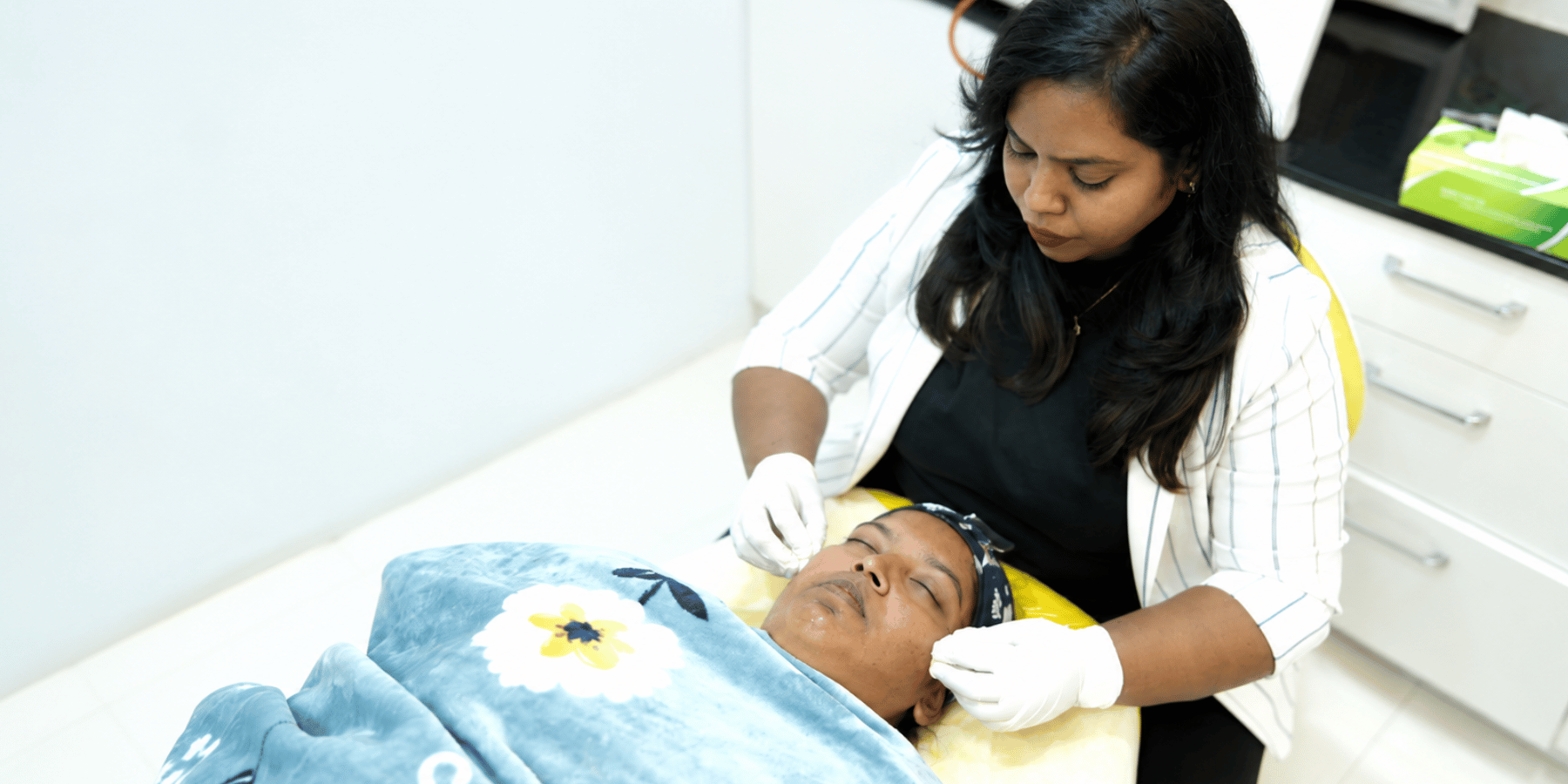
Most people who are asking about chemical peels have already tried a couple of masks from the drugstore, brightening serums, exfoliation and so on. A peel isn't a stronger version of that. It's a measured acid solution, applied by hand, timed to the minute, and removed before it can do more than it's meant to. That precision is really the whole reason to get it done in a clinic instead of trying something similar at home.
What happens during the chemical peel treatment
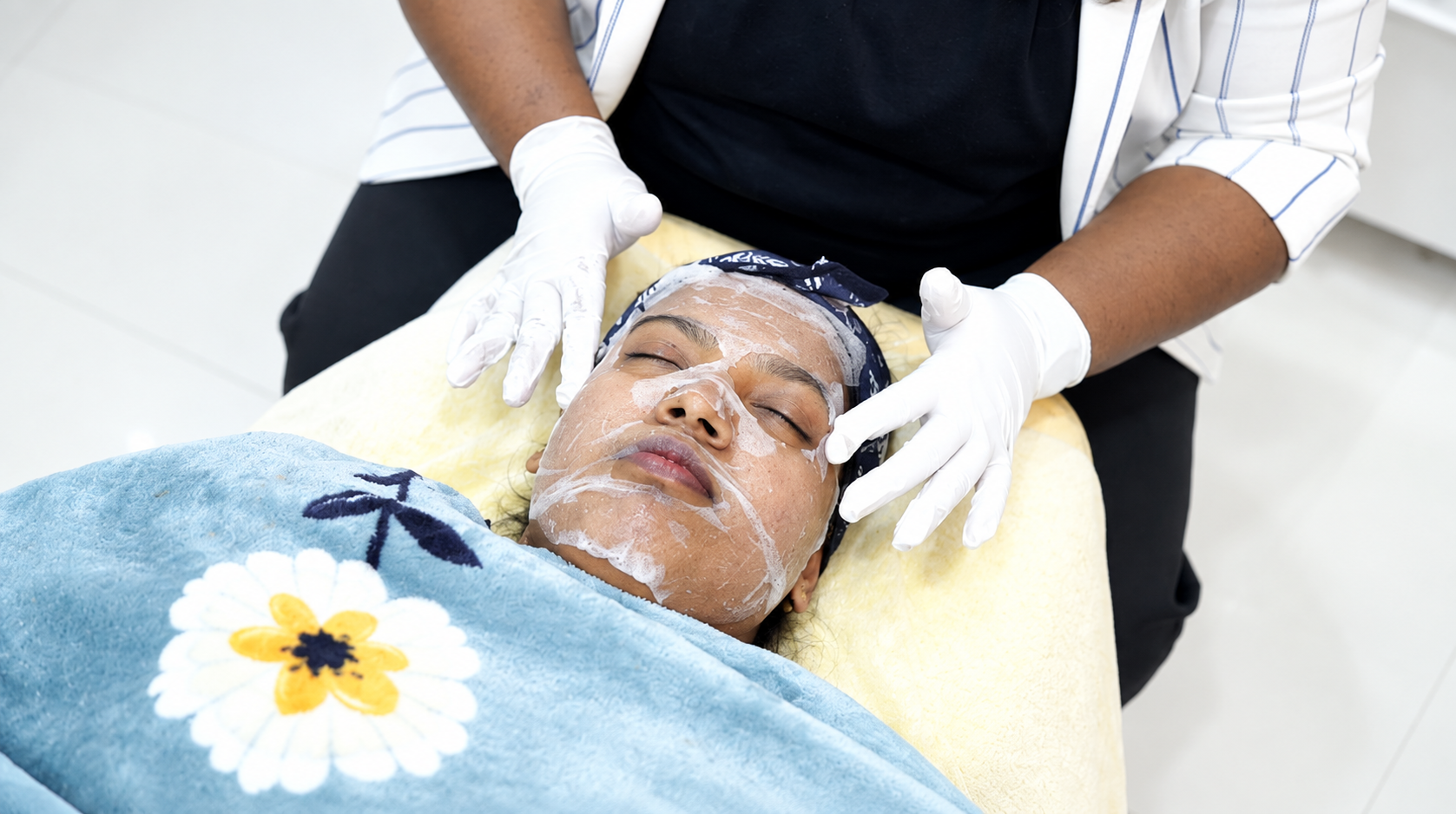
The dermatologist first cleans your skin, then puts the peel solution on it. They leave it on for a set amount of time and then remove it or neutralise it. That's basically how the treatment works. What changes from patient to patient is strength: a gentle peel can feel like a mildly tingly facial, a stronger one leaves several days of visible flaking. Which one you need depends on what's being treated, not preference.
Which peel fits your concern
| Concern | Peel commonly used | Typical concentration range |
|---|---|---|
| Active tanning | Glycolic or lactic acid | Roughly 20 to 35% |
| Acne and clogged pores | Salicylic acid | Roughly 20 to 30% |
| Acne marks, dull patches | Light TCA or a combination peel | Usually under 15% TCA |
| Stubborn pigmentation, melasma | Dermatologist-designed combination peel | Varies by product used |
None of these numbers are something to try yourself. They're a starting point a dermatologist adjusts once they've looked at your skin in person, not a recipe off the internet.
Why Indian skin needs a different approach
If your skin has more melanin, there is a higher chance of the treated area becoming darker instead of lighter. This can happen if the peel is too strong for your skin or if you don't follow the recommended aftercare. This isn't a minor caveat. The Indian Journal of Dermatology, Venereology and Leprology's guidelines on chemical peels recommend priming the skin beforehand, often with a mild retinoid or a low-strength glycolic agent, specifically because this lowers that risk. Skipping that prep step is where most bad outcomes start.
What happens during and afterward
A session runs 20 to 30 minutes. There's a mild tingling or warmth while the solution sits, nothing close to real pain. Superficial peels need almost no downtime. Medium ones leave skin pink and flaking for three to five days, and sunscreen during that window isn't optional. It's the difference between the peel working and the peel causing a new pigmentation problem.
Sunscreen isn't optional after a peel — it's the difference between the peel working and the peel causing a new pigmentation problem.
A few myths worth clearing up
Visible peeling doesn't mean a treatment - worked harder. Plenty of effective peels barely flake at all. Peels don't thin your skin over years of use either; done properly, they support renewal, not damage. And they're not a last resort reserved for severe skin. A fair number of people use lighter versions just to look less tired.
What does it cost?
There's no single number here, and anyone quoting a flat rate for "a chemical peel" without asking what you need is skipping a step. Pricing depends on the peel's strength and how many sessions your skin realistically needs. A chemical peel in Bangalore usually gets priced as a short course, not a one-off, since most concerns need repeat sessions a few weeks apart before the change holds.
A quick word on where you get it done
At PRALASH Dermystique & Dentique, peel selection starts with looking at your skin in person, not picking from a list. This isn't about selling you a treatment, it's about keeping your skin safe. Using the wrong peel strength for your skin can cause a new dark patch instead of helping the existing one fade.
FAQs

Medically reviewed by Dr. Premalatha, MBBS, MD (Dermatology)
16 years in practice, PRALASH Dermystique & Dentique, HRBR Layout, Bengaluru. Last reviewed: September 2026.