Safe, painless tooth removal at PRALASH Dermystique & Dentique, HRBR Layout. Our experienced team ensures a smooth, stress-free experience with rapid recovery.
Tooth extraction is the removal of a tooth from its socket in the jawbone. While we always aim to save natural teeth through restorative treatments, extraction becomes necessary when a tooth is severely decayed, broken, infected or causing crowding.
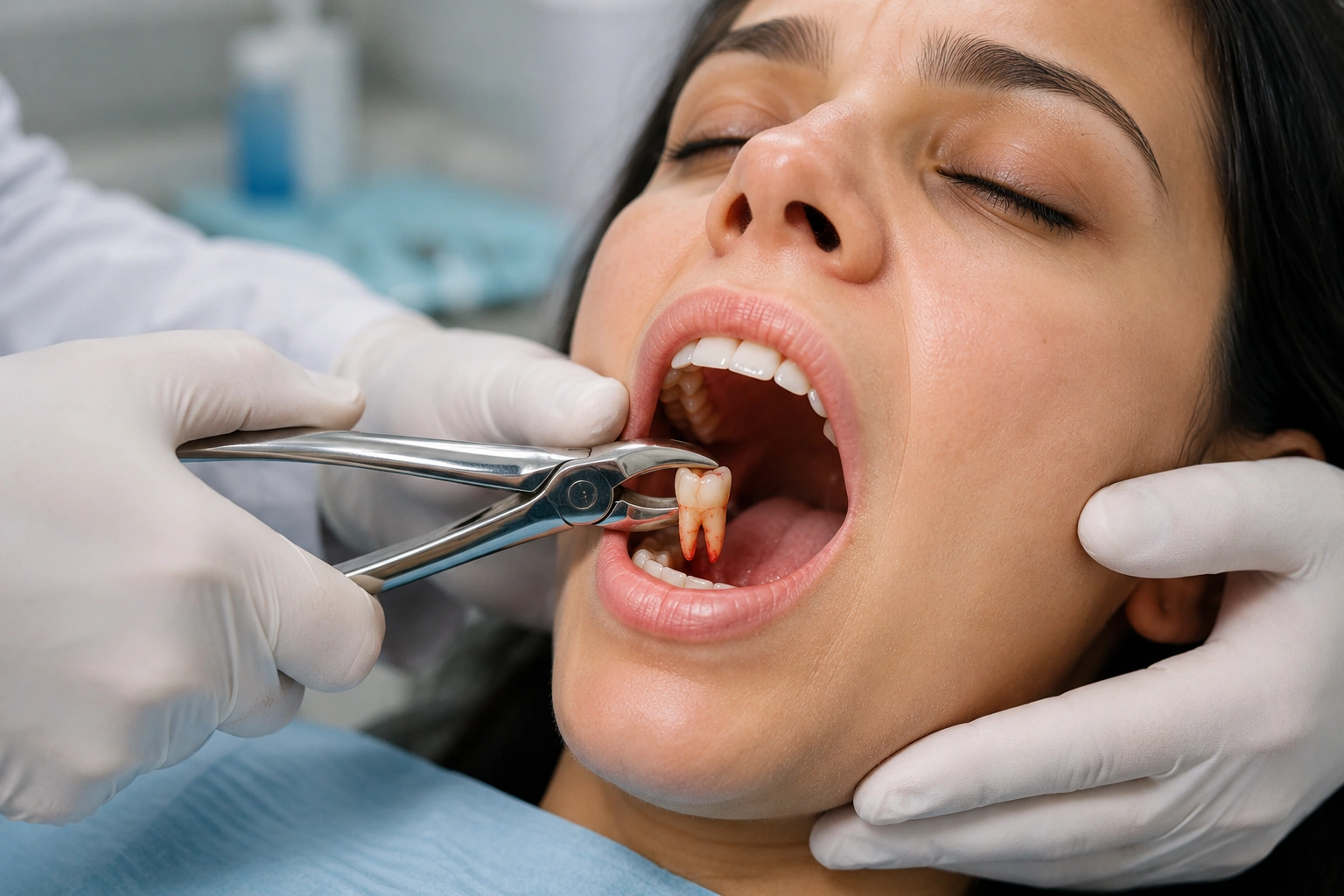
At PRALASH, we perform extractions with precision and care — using local anaesthesia and atraumatic techniques to ensure you're comfortable throughout. Extraction takes 20–40 minutes and is followed by clear aftercare guidance for a smooth recovery.
We examine the tooth and take a dental X-ray to assess root position, bone level and surrounding structures before deciding on the extraction approach.
The tooth and surrounding gum are completely numbed. You will feel no pain during the procedure — only gentle pressure as the tooth is loosened.
Using specialised elevators and forceps, the tooth is loosened from the ligament and gently removed. Surgical cases may require a small incision.
The socket is cleaned and gauze is placed to aid clot formation. Sutures may be placed for surgical cases to promote faster healing.
You leave with written aftercare instructions, medications and a follow-up date. Total procedure time is typically 20–40 minutes.
For visible, fully erupted teeth. The tooth is loosened with an elevator and removed with forceps under local anaesthesia in a single visit.
For broken, impacted or multi-rooted teeth requiring an incision. The tooth may be sectioned into pieces for easier, safer removal.
Specialised removal of wisdom (third molar) teeth, which may be impacted, partially erupted or growing at an angle.
Laser energy is used to make precise soft-tissue incisions and aid in gum contouring — reducing bleeding and post-operative discomfort.
Eliminates the source of infection or fracture pain that cannot be resolved by other treatments.
Removing an abscessed tooth stops bacteria from spreading to adjacent teeth and the jawbone.
Relieves the gum swelling and facial pain caused by a severely infected tooth.
Removing a decayed tooth protects neighbouring healthy teeth from further bacterial spread.
Creates space and healthy bone for future replacement options like implants or dentures.
A tooth may need extraction if you have:
Cost varies by tooth type, root anatomy and procedure complexity. Exact quote provided after X-ray review.
Erupted, accessible tooth — straightforward single-visit procedure.
Complex cases involving multi-rooted, broken or impacted teeth.
Impacted wisdom tooth removal with surgical approach and possible suturing.
Our dentists have extensive training in both simple and surgical extractions across all tooth types.
We take time to ensure you're fully numb and comfortable before starting — no rushing, no pain.
Atraumatic extraction tools minimise bone trauma and speed up healing — less swelling and faster recovery.
We guide you on the best tooth replacement options — implants, bridges or dentures — to restore your smile.
| Factor | Tooth Extraction | Root Canal | Dental Implant |
|---|---|---|---|
| Preserves Natural Tooth | No | Yes | No (replacement) |
| Cost | Lowest | Moderate | Highest |
| Recovery | 2–7 days | 1–3 days | 3–6 months (implant) |
Rest, bite on gauze to stop bleeding, take medications as prescribed. Avoid hot food, alcohol and smoking. Apply ice packs for swelling.
Swelling reduces and the socket begins to close. Soft-food diet continues. Gentle saltwater rinses after 24 hours help keep the socket clean.
Gum tissue fully covers the socket. Normal diet can resume. Discuss replacement options (implant/bridge) at follow-up appointment.
Book a consultation at PRALASH Dermystique & Dentique, HRBR Layout — gentle, pain-free care you can trust.